
How Demeyere’s Silvinox Treatment Actually Works: The Electrochemical Process Behind Stainless Steel’s Lasting Shine
We developed our Silvinox treatment to solve a problem every stainless steel cookware owner faces: fingerprints, water spots, and the gradual dulling that comes from normal kitchen use. Unlike coatings that sit on top of the steel and eventually wear away, the Demeyere Silvinox treatment changes the steel’s surface at the molecular level, enriching the passive chromium oxide layer that already exists on every piece of stainless.
The result is a finish that stays brighter and cleaner with less effort, resisting the discoloration and staining that untreated stainless develops over time. This guide walks through the actual electrochemical process behind Silvinox, what it does to the steel’s crystalline structure, and why that matters for how your cookware performs decade after decade.

The Passive Layer on Stainless Steel and Why It Matters
Every piece of stainless steel—treated or not—has a thin passive layer of chromium oxide on its surface. This layer forms spontaneously when chromium in the steel alloy reacts with oxygen in the air, creating a barrier that prevents deeper corrosion. On untreated stainless, that layer measures only a few nanometers thick and contains inconsistencies where the underlying iron can still oxidize, leading to the brown or rainbow discoloration you see after high-heat cooking.
The metallurgical structure of stainless steel relies on this chromium oxide film for its corrosion resistance, but the natural passive layer alone isn’t optimized for fingerprint resistance or cosmetic durability. Our Silvinox process thickens and refines that existing layer, increasing its chromium content and making the surface more uniform at the microscopic level. The steel underneath remains identical—same alloy composition, same grain structure—but the enriched surface layer changes how the cookware interacts with oils, water, and heat.
The Electrochemical Bath: What Happens During Silvinox Treatment
Silvinox treatment involves immersing the finished stainless steel cookware in an electrochemical bath where a controlled electrical current drives a reaction at the surface. The bath’s chemistry and the applied voltage selectively dissolve iron and nickel from the outermost atomic layers while leaving chromium behind, effectively concentrating chromium at the surface and allowing a thicker, denser chromium oxide layer to form.
This isn’t a plating or coating process—we’re not adding a foreign material on top of the steel. Instead, we’re rearranging what’s already there, pulling chromium to the surface and locking it into a more stable oxide structure. The treatment penetrates only a few micrometers deep, so the bulk properties of the steel—thermal conductivity, strength, magnetic response—remain unchanged. What does change is the surface energy and how liquids spread across the steel, which directly affects how fingerprints appear and how easily food residue washes away.
The same precision that goes into our Atlantis and Industry line manufacturing governs the Silvinox bath parameters: temperature, voltage, immersion time, and bath composition are all controlled to ensure consistent results across every pan.
Surface Energy, Wettability, and Why Fingerprints Don’t Stick
Lower Surface Energy Means Less Adhesion
The enriched chromium oxide layer produced by Silvinox has a lower surface energy than untreated stainless, meaning oils and water don’t spread as readily or bond as tightly to the surface. When you touch untreated stainless, the oils from your skin wet the surface and oxidize into visible fingerprints that resist simple wiping. On a Silvinox-treated surface, those same oils bead up slightly and wipe away with a dry cloth because they never fully adhered.
This same principle applies to outdoor cooking equipment where stainless surfaces face constant exposure to grease and smoke residue—lower surface energy makes post-cook cleanup faster. For cookware, it means water spots evaporate without leaving mineral rings, and the pan’s exterior stays brighter even after years of stovetop use.
Uniform Oxide Layer Prevents Localized Staining
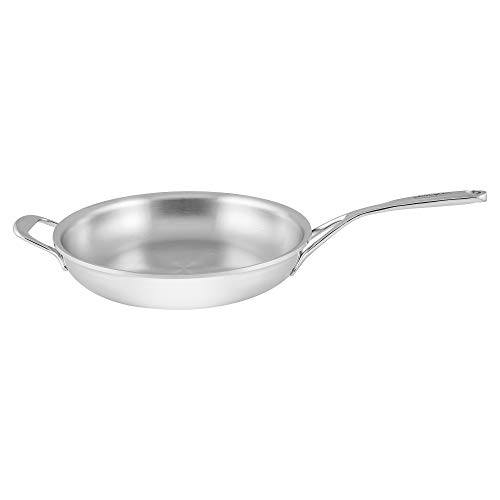
Untreated stainless develops uneven oxidation during heating, with some areas forming thicker, more colorful oxide films than others. Silvinox creates a uniform starting layer that oxidizes more evenly under heat, reducing the rainbow effect and the brown staining that appears around hot spots. Our 5-Plus fry pans with Silvinox treatment maintain a more consistent appearance across the cooking surface even after repeated high-heat searing.
Durability and Maintenance Over Time
Because Silvinox is an integral part of the steel’s surface rather than an applied coating, it doesn’t wear off with normal use. Scrubbing with stainless steel cleaner, abrasive pads, or even metal utensils won’t remove the treatment—you’d have to grind away several micrometers of steel to reach untreated material beneath. The chromium-enriched layer also regenerates: if scratched, the exposed steel immediately re-passivates in air, forming a new chromium oxide film that closely matches the treated surface around it.
You can use any cleaning method appropriate for stainless steel—bar keeper’s friend, baking soda paste, even dilute vinegar for stubborn stains—without damaging the Silvinox finish. The treatment does not make the steel non-stick or reduce its need for proper preheating and oil, but it does mean the pan’s exterior and interior walls stay cleaner between deep cleanings. Our grill pan and asparagus cooker both carry Silvinox on all stainless surfaces, inside and out, for consistent ease of maintenance across the entire piece.
Why Surface Chemistry Matters for Long-Term Cookware Ownership
The Silvinox treatment doesn’t change what stainless steel is—it optimizes what stainless steel naturally does, making the passive chromium oxide layer thicker, more uniform, and more resistant to the cosmetic wear that untreated cookware accumulates over years of use. For cooks who want their cookware to look and clean like new without constant polishing, that difference in surface chemistry translates directly into less maintenance and a longer period before deep cleaning becomes necessary.
We apply Silvinox to every piece in our stainless steel range because it costs us almost nothing in manufacturing time but delivers measurable value in how the cookware ages. The process is proven, stable, and integrated into our production workflow—so there’s no reason not to include it on every pan we make.
Common Questions About Silvinox Surface Treatment
No. Silvinox modifies only the outermost few micrometers of the steel surface and does not change the underlying alloy composition, thermal conductivity, or the pan’s multi-ply construction. Heat distribution depends on the base layers—aluminum or copper cores—and those remain identical whether the visible stainless surface is treated or not.
The Demeyere Silvinox treatment does not interfere with fond development, browning, or any other cooking reaction. It affects only how the steel’s surface resists staining and fingerprints, not how food interacts with the pan during cooking. You still need to preheat properly and use adequate fat to prevent sticking.
No. Because the treatment enriches the existing chromium oxide layer rather than applying a separate coating, it is integral to the steel itself. Scratches expose fresh steel that immediately re-passivates in air, maintaining corrosion resistance. You can use metal utensils, steel wool, and any stainless-safe cleaner without damaging the finish.
Silvinox-treated cookware is dishwasher-safe and resists the spotting and dulling that untreated stainless often develops in the dishwasher. The treatment does not eliminate the need to remove stuck-on food before washing, but it does mean the pan emerges from the dishwasher looking closer to new than untreated stainless would.
No seasoning is required or beneficial on stainless steel, treated or not. Maintenance remains the same: wash after use, dry thoroughly to prevent water spots, and use stainless steel cleaner or a baking soda paste for stubborn stains. The only difference is that Silvinox-treated surfaces require those deep cleanings less often.
Yes. Bar Keeper’s Friend, baking soda, white vinegar, and any other product safe for stainless steel will not harm the Silvinox finish. The treatment is chemically and mechanically stable, so you can clean as aggressively as the stainless itself will tolerate.