
Demeyere Atlantis vs Proline 7-Ply Fry Pans: Which Line Fits Your Kitchen?
Our Atlantis and Proline lines both deliver full 7-ply construction, but they differ in handle ergonomics, weight distribution, and the scenarios where each excels. We built Atlantis for home cooks who want restaurant-level heat control without the wrist fatigue of heavier pans, while Proline targets chefs and serious enthusiasts who prioritize maximum thermal mass and durability over lighter handling.
Understanding which trade-offs matter for your cooking style makes the Demeyere Atlantis vs Proline decision straightforward. This guide walks through the key differences so you can match the right pan to your stovetop habits and the dishes you cook most often.

Construction and Material: Where the Two Lines Diverge
Both lines use our full 7-ply stainless steel construction with an aluminum core, but Proline adds slightly thicker gauge steel at the cooking surface. This extra mass holds temperature more aggressively when you drop cold ingredients into a preheated pan, which matters for tasks like searing scallops or building fond for pan sauces.
Atlantis balances that thermal stability with a lighter overall profile, shaving roughly 15 percent off the pan weight compared to a same-size Proline skillet. The difference shows up most clearly in the 12.6-inch Proline fry pan, which weighs enough that flipping vegetables one-handed becomes a deliberate motion rather than a casual toss.
We use the same rivet-free Silvinox surface treatment on both lines, so maintenance and staining resistance remain identical. The construction choice comes down to whether you value lighter handling or maximum heat retention when the pan is fully loaded.
Handle Design and Balance Point Differences
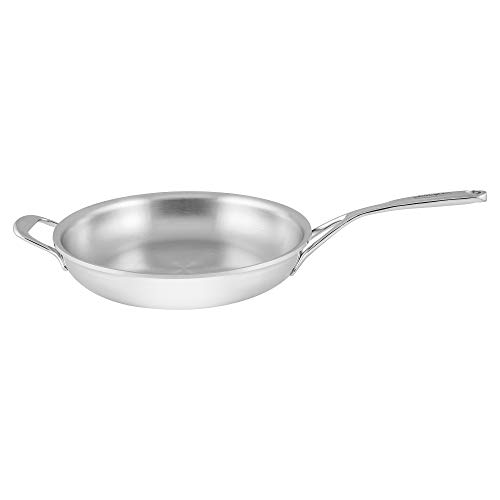
Atlantis features a slightly shorter, more upright handle with a rounded profile that fits naturally into a pinch grip. Proline’s handle extends longer and sits flatter, distributing weight farther back from the pan edge to offset the heavier cooking surface.
For tasks that involve frequent pan movement—tossing stir-fries, sliding omelets, or flipping crepes—Atlantis delivers better wrist comfort over extended sessions. The shorter handle also makes it easier to fit the pan into standard home ovens without the handle blocking adjacent racks.
Proline’s extended handle shines when you’re working with higher volumes or heavier ingredients. The extra leverage keeps the pan stable when you’re stirring thick risotto or moving a full load of bone-in chicken thighs from stovetop to oven, and the flatter profile stays cooler during longer stovetop sessions because more surface area radiates heat away from your grip.
Heat Distribution and Responsiveness on Different Cooktops
On induction and gas ranges, both lines heat evenly across the cooking surface with no noticeable hot spots once preheated. Proline’s thicker base takes roughly 30 seconds longer to come up to medium-high temperature, but it also resists sudden drops when you add cold butter or a handful of mushrooms straight from the fridge.
Atlantis responds faster to dial adjustments, which home cooks often prefer for tasks like adjusting scrambled eggs from medium to low heat or catching a sauce just before it reduces too far. The quicker response time makes it more forgiving if you’re multitasking or learning to read visual cues instead of relying on precise temperature settings.
On electric coil cooktops, Proline’s added mass helps bridge uneven heat zones and maintain steadier temperatures despite the coil’s on-off cycling. Atlantis still performs well but requires slightly more attention to pan positioning and occasional rotation for perfectly even browning when working with large-diameter models.
Maintenance Considerations and Longevity
Both lines clean identically thanks to the same Silvinox electrochemical treatment, which keeps the exterior bright without polishing and prevents most water spotting. If you do experience stubborn residue inside an Atlantis pan, the same cleaning approach we recommend for fixing scorching on Atlantis saucepans applies here—Bar Keeper’s Friend and a non-abrasive pad handle it in minutes.
Proline’s thicker gauge steel resists warping slightly better under extreme thermal shock, such as moving a screaming-hot pan directly to a cold granite countertop or running it under cold water immediately after high-heat searing. Atlantis tolerates the same treatment without issue under normal use, but if your cooking style regularly involves abrupt temperature swings, Proline’s extra rigidity provides longer-term flatness on glass and induction surfaces.
Both lines carry the same warranty and expected multi-decade service life. We’ve seen 20-year-old Proline pans still flat enough to spin a nickel on the cooking surface, and Atlantis models from the early 2000s that show minimal wear beyond the natural patina that develops inside any stainless pan with regular use.

Choosing Based on Your Cooking Habits
If you cook primarily for two to four people and value lighter handling for frequent stovetop tasks, Atlantis delivers the same even heating with less arm fatigue. Home cooks who move between multiple burners, adjust temperatures often, or work in smaller kitchens where oven clearance matters tend to prefer Atlantis for daily use.
Proline makes more sense for larger households, batch cooking, or anyone who regularly sears proteins at high heat and wants maximum temperature stability when the pan is crowded. Professional cooks and enthusiasts who don’t mind the extra weight appreciate Proline’s ability to hold a steady sear under heavy loads and recover heat faster after adding cold ingredients.
Neither line compromises on core performance—you’re choosing between two excellent options that prioritize slightly different handling characteristics. The 9.4-inch Proline and 11-inch Proline sizes offer good entry points if you want to test the heavier feel before committing to the full range, while any Atlantis model gives you the lighter handling immediately.
Matching the Right Line to Your Kitchen
The Demeyere Atlantis vs Proline decision hinges on how much you value lighter handling versus maximum heat retention under heavy loads. Atlantis gives you the same 7-ply construction and even heating in a more maneuverable package, while Proline trades that lighter feel for thicker steel that holds temperature aggressively and resists warping under extreme use.
Neither line forces you to compromise on durability, cleaning ease, or compatibility with your cooktop. We built both to last decades, and the choice comes down to whether your daily cooking style benefits more from quicker responsiveness or stubborn thermal mass when the pan is fully loaded.
Common Questions About Atlantis and Proline Fry Pans
Yes, both lines tolerate metal utensils without damage to the cooking surface. The Silvinox treatment protects against scratching and keeps the pan’s appearance intact even with regular use of metal spatulas, whisks, and tongs.
We still recommend wooden or silicone tools for delicate tasks like flipping fish fillets, but that’s about protecting the food rather than the pan.
Proline takes about 30 seconds longer to reach medium-high heat because of its thicker base, but both lines preheat faster than most tri-ply pans thanks to the 7-ply construction. The difference is noticeable if you’re timing multiple dishes but rarely matters for single-pan meals.
Once preheated, Proline holds that temperature more stubbornly, while Atlantis responds faster when you turn the dial down.
Atlantis resists warping under normal high-heat cooking, including searing steaks and preheating empty for a few minutes. Extreme thermal shock—like running a screaming-hot pan under cold water or setting it on a frozen countertop—can warp any pan, but Atlantis tolerates the accidental mistakes most home cooks make without losing its flat base.
If you regularly subject pans to deliberate abuse, Proline’s thicker gauge adds a margin of insurance.
Proline’s longer, flatter handle radiates heat over a larger surface area and stays noticeably cooler during extended stovetop sessions. Atlantis handles heat up slightly faster but still remain comfortable to grip bare-handed for most tasks under 20 minutes.
Both handles get hot enough to require a towel or oven mitt after 30 minutes on medium-high heat or any time the pan goes into the oven above 350°F.
Yes, Atlantis and Proline nest and store together without issue, and both lines work on the same cooktops with identical cleaning routines. Many cooks keep a lighter Atlantis skillet for daily eggs and vegetables alongside a heavier Proline pan for weekend searing projects.
The performance overlap is wide enough that you won’t notice inconsistencies when switching between them mid-recipe.
The weight difference becomes noticeable when lifting the pan off a high shelf or moving it in and out of storage daily. If you have limited upper-body strength or joint issues, the lighter Atlantis reduces strain over time.
Proline isn’t prohibitively heavy—most people adapt within a week—but if you already find standard tri-ply pans borderline too heavy, Atlantis is the better long-term fit.